

Customer Testimonials
ZEROPLUS logic analyzers are used by engineers, developers, and academic users across embedded systems, IC design, communication debugging, and electronics education. The following testimonials show how users apply Zeroplus tools to speed up debugging, verify digital signals, and solve protocol-related issues more efficiently.
A Practical Logic Analyzer for I2C, SPI, and Embedded Development
Mr. Mark Oliver (Australia)
Mark Oliver Just a bit of background on me - I'm a 59 year old professional Software Engineer that works for an R&D design company that develops a range of mission critical Internet of Things (IOT) monitoring products. I use the LAP-C for both work and home. At work I use it mainly as a protocol analyser basic for I2C, SPI and RS232 development. Although at low clock rates (20MHz) the LAP-C has unlimited uses for checking logic control. The LAP-C is a very indispensable tool both at work and at home. My home projects range from tiny Atmel Mega8 (8bit) Arduino devices up through STM32F042 (32bit) projects and to the complex ARM Cortex Android based devices. I’ve also used it with the newest Raspberry Pi and the Espressif - ESP32. I would like the company I work for to purchase more of these devices.
Reliable I2C Protocol Analysis for Legacy System Development
Julio Enrique Varela Moraga (Chile)
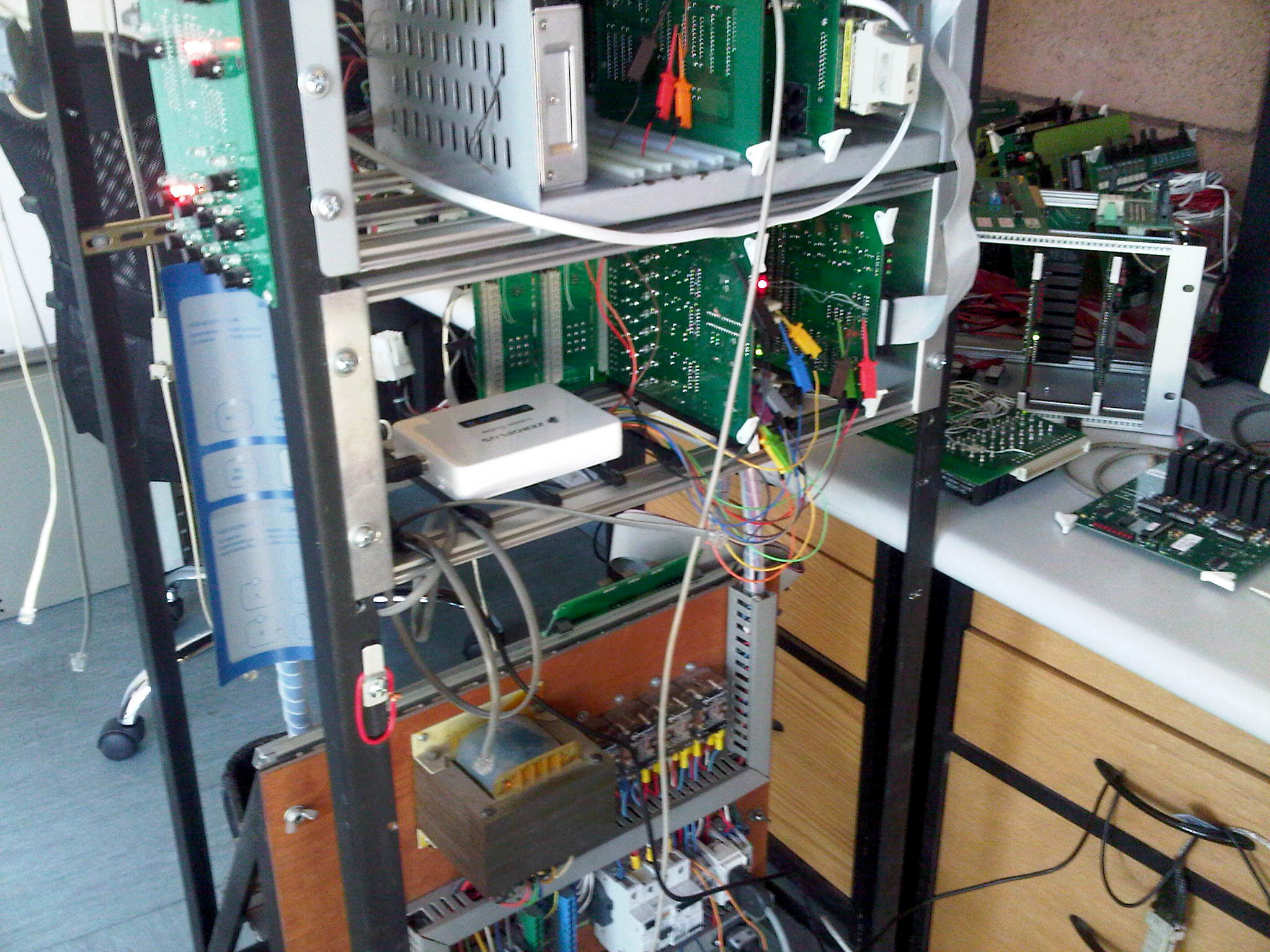
I am really impressed by the performance of your Zero pluls LAP-C logic analyzer, especially on the I2C module which I am currently using. The system that we are analyzing we designed in the year 1998,It is composed of a Master and eight Slaves.The Master has a processor DS87C520 ,and the processing slaves PIC 16F873A In both processes was simulated by Software all the protocol I2C. In Pic in the processing the implementation was written in Assembler. Currently we are incorporating a second Bus I2C,using the chip PCA9555.This circuit is mounted in the slaves,and accessed by a second processing AT89C55,mounted in the Master. In the opportunities that we have attempted to use the module incorporated in the processor's PIC (mode i2c),never it has operated adequately,for this motive,we have simulated the protocol I2C in the PIC.
Speeding Up SPI Driver Debugging in Embedded RTOS Projects
Mr. Helmut Schoettner (Austria)
Mr. Helmut Schoettner Speed up embedded device driver development by spending just 250 EUR Being a freelancer and developing hardware concepts and device drivers for embedded RTOS systems running on ATMEL’s AT91SAM7X I really faced what you can do by just spending 250 EUR once per seat to speed up embedded device driver development. For a long time I managed all my tasks with my long term experience and the detailed user guide of the microcontroller with assistance of examples from the manufacturer and some forums. Then I started my SPI driver which makes extreme use of the DMA controller to save CPU cycles. It was a promising design that I was very proud of. But after some months my progress stopped completely. I wasn’t able to locate the problem – although I tested thoroughly: •Do I have a RTOS problem? •Is the hardware working properly? •Is my SPI driver code working properly? •Does my code for the SPI slave circuit transmit the proper data? Using a usual digital storage oscilloscope with a small amount of memory didn’t solve the puzzle. I have several transmissions over the SPI interface of the chip driven by its DMA controller. One of the slave circuits was not responding properly. With a basic DSO you usually have at your fingertips with some thousand memory points only, there was no chance to analyze the whole SPI transmission to see what’s happening there. Looking around for a good DSO with some mega-points of sample memory was very frustrating. Several thousand of EUROs need to be spent to have a good chance. For each seat. That was the time I saw the products from ZEROPLUS. I got a bundle with a LAP-C Pro 32256M device which offered me 16 channels plus triggering for a DSO (e.g. for additional signal quality checks) and last but not least the most helpful software equipped with several protocol analyzer plug-ins (and many others to purchase). These plug-ins interpret the data for you, so you never will count bits anymore. The patented compression technology of ZEROPLUS made it easy to analyze the whole SPI transmission at a great resolution, although the small device I’ve chosen offers only 4Mbit of RAM. The problem was pictured in no time. I made connections to the chip select decoder input (3 wires instead of 8) and to the non-working slave at its / CS, SPCK, MOSI and MISO. Then I set the filter of the packet list to my chip select decoders inputs, activated the sync between list and logic view and moved thru by the packet list.
A Useful Debugging Tool for Student Electronics Projects

Dries Hulens – Student Master in electronics-ICT (Holland)
The logic analyzer is one of my best purchases so far. It is certainly not too expensive and is very useful for a hobbyist in electronics as I am, but also for professional electronics it is an indispensable tool . I was recently asked to create a DMX transmitter(DMX is a protocol used to control light effects on stages). I have studied the protocol and written some code for the microcontroller in the dmx transmitter. Because the code didn’t immediately work, I used the logic analyzer to see what the dmx transmitter was transmitting. After a few milliseconds of monitoring the bus, the problem was found quickly. The software of the analyzer examines the data and tells you what the data means. For example, in the DMX protocol there is a “brake”, “mark after brake”, “info”,… and the program gives the right name to the right piece of data. Through this I noticed that the time of the brake wasn’t long enough. A few adjustments to the code and everything worked like it should be. I have chosen this analyzer because it supports all the protocols that I frequently use like I²C,SPI,one wire and DMX. The logic analyzer supports many more protocols, so if I have to make another project in the future, with another protocol, I’m sure I can use my logic analyzer to debug the project if there are problems. The software is very user friendly. Like most electronics I only read the manual when a device is not working after 2 days of trying. But this was not the case with the logic analyzer, it was very easy to use. So far I didn’t have to read the manual. In no time, everything is ready to analyze a certain protocol. It is also very easy to find a certain data-package in a long string of data due to a very easy search engine. I didn’t find any negative points so far. The logic analyzer is highly recommended for any electronics because it saves you a lot of time debugging . Dries Hulens – Student Master in electronics-ICT.
Quick RS232 Debugging for Personal Electronics Projects

F de Jong (Holland)
I was working on a project with rs232 codes and it did not get to work. After days of frustration I ordered a zeroplus logic analyzer on the Internet. Within two days I got the analyzer and within the next hour the project was up and running again. The analyzer told me what the rs232 code was and the software within my project failed. I could solve my software fault and it all came to life. The zeroplus Logic analyzer 16032 came with a few standard protocols like the rs232 signals. A simple setting in the software on the laptop made it that the signals came on the screen and after a few settings it also told me in a simple view the codes. Not long ago logic analyzers were not cheap. It was almost impossible to buy one. Nowadays with the zeroplus devices it is cheap to get one. This makes working on single chip computers easier and easier. The complex communication protocols like i2c, singlewire protocol, but also the rs232 are easier to understand now. One of the next projects that I want to use is a combination of a PIC16F88 processor with a temperature sensor of the type DS1820. This is a sensor that uses the 1 wire protocol. Starting reading about this device gave me reason to worry. The 1 wire protocol seems to be very difficult to understand. Reading a bit more and it gets easier but still difficult. The protocol has to be made within software and is not hardware based within the PIC16F88. I hope that the logic analyzer will give me extra support on this. See if the signals are real as I try to program them. The Zeroplus should confirm this (hopefully) as one of the supported signal software is the 1-wire protocol. So, it is easy to use, not too expensive and the software for analyzes is increasing. It was a good investment in my electronics hobby room.
Improving Project Debugging with Better Trigger Functions

Evert Bennewitz (Holland) 2011/7/9
Hello, My name is Evert Bennewitz. I am an electronics engineer who has built several projects using mainly Microchip PIC's as the uP. In my last project I built a fully automated PSU load that is able to random load the PSU and monitor its performance, temp, etc. In my project's I always use a lot of serial communication. Also component with serial communication. This is because several of my projects involved measuring inside an already built machine. The reason I purchased the analyzer is that such a tool will save me a lot of time debugging my projects. (I am programming mainly in assembler!) If you are designing you always bump into program mistakes and timing problems (in my case anyway) With this tool these problems are easy to find and therefore quick fixed.I have chosen this analyzer because of its performance / price tag. I think you get a well equipped device for a reasonable prize.Also is good that the device is powered by the USB.To be mentioned that the service from Eleshop is very good. The second product bought was the trigger extension. This extension is a very good addition to the software because it will let you trigger on almost everything. As we all know triggering is a main issue when you want to find a specific situation at a specific time or sequence. Without this trigger option it is much harder to find the "right spot" of your pain. I can (and will) recommend this device to everyone who is developing small or big projects.What I would like to have is longer, more supple (flexible) test leads. I have made them myself because sometimes it is necessary to connect the device inside a finished housing but I realize that larger cables introduce a different problem. Maybe in the future shielded cabled would be nice. Thanks again for this great offer. Best regards' Evert Bennewitz.
Cost-Effective Logic Analysis for Daily MCU and FPGA Work

roelvh (Holland)
I am an almost daily-user of the zeroplus Logic Analyzer (LAP-C 16032). I first had my doubts about this product because it was priced fairly low compared to other logic analyzers of the same class. A quick look at the demo-software helped me to make the decision. The first tests showed me that this product is worth its money's, you get a professional piece of test equipment for a very low cost. The device has a robust and compact build. The casing feels strong and sturdy and can withstand rough treatment. I also bought a carrying case with test leads of 40 cm and additional test clips. The bag is of good quality and offers more than enough protection for the logic analyzer during travel. The extra long cables and test clips are a must. I have missed yet another black test clip for the ground because there is only one black test clip that comes with the logic analyzer by default. The test clips are feeling a lot less sturdy, but they are still perfectly usable. I use the device primarily for measurements of microcontrollers and FPGAs. The small memory of only 32kb is more than enough. Thanks to the compression technology that is used, there may be up to 255 times more data recorded. The free software you get with this product is very comprehensive. After one year of intensive use, I still haven't used all the functions. The software is very user friendly and has a clear layout. Many zoom capabilities and the use of cursors makes it easy to analyze the recorded data. It is also possible to indicate the amount of time between two flanks of a data line. If you use the built-in protocol analyzer, you can see the received packets on the screen in clear colors. The use of these colors makes it possible that, even if you zoom out to a higher level, you maintain the overview with ease. My conclusion, a very good device thanks to the extensive software that has become an indispensable measurement tool in my lab.
A Reliable PC-Based Logic Analyzer for Prototype Development
Arthur Ketels (Holland)
Our company makes amongst others prototype electronics. It is a mix of analogue and digital technologies. We use 8 to 32 bit micro controllers and FPGA's. Those electronics are interfaced with a multitude of buses. Many are standard serial like SPI, I2C, I2S or UART. Others are parallel like synchronous or asynchronous RAM buses. Then there are the special signals like encoders, pwm or lvds. Many times those signals need no debugging and just work "out-of-the-box". A long time we just did with our digital scope to find the issues in the logic. But the more complex the interactions become the more constraints come forward from the scope. Time for a logic analyser. Then the hunt begins for a simple, cost effective but capable LA. From previous experience I did not like the closed systems that integrate the capture hardware and the data processing and set-up. You end up with a tedious and difficult to handle GUI at best. And every time one needs that one special function or trigger it is nowhere to be found. Then there are the obvious issues when one wants to store a capture for later reference. So a separate capture unit and software on a PC/Laptop must be. After browsing the internet a few (and only a few) candidates came up. A local distributor had a Zeroplus LAP-C Pro 32256M LA on stock for a great price. So it was in the house a few days later. It comes in a nice carry case where all parts fit nicely. I was pleasantly surprised to see so many clip probes included. Connecting everything up is easy because of the clear markings on the device and the colour coding. Installing the software was easy too. Important for me is that the software can be installed on multiple PC/laptops. Depending where I have to measure I can just use the PC/laptop nearby, plug in the LAP-C Pro 32256M, fire up the software, and you are good to go. The software is easy and intuitive to use. Even without reading the manual. Only when you need the advanced stuff the manual is mandatory. The software is clearly developed with a mouse in mind. It is sometimes hard to use the keyboard effectively. Also it is tricky to drag the A and B cursors without losing them on the way. Loading and saving a capture is easy, but there is no easy way to compare two separate captures. The hardware just works, nothing much to say about that. A broad range of trigger levels and high voltage input protection up to 30V makes this thing almost bullet proof. A minor nag is the rigidity of the connecting wires, if you have a small PCB just laying on your bench the wires will pull it off if you are not careful. The LA saved the day on multiple occasions where I had difficult to understand problems. One time the SPI interface from a uP to a slave device would refuse to go over 12MHz while the specification clearly stated 20MHz. The LA showed the culprit to be a bug in the uP SPI hardware where the sample point was one uP clock late in relation to the SPI clock flank. Another time I had to find a bug in a RS485 bus system with multiple uP's connected together. Once in a while a slave took the bus too early, corrupting other packets. Software debugging took a few days already without finding the cause. The advanced trigger in the LAP-C Pro 32256M found the issue in a few minutes. Pro's: Good price / performance、Compact.Self powered from USB、Easy to use software、Wide trigger range、Protected inputs、Adequate buffer (even 128KB)、Data compression. Con's: Rigid wires、Capture speed (200MHz) too low for modern designs、Input capacitance a bit high for high speed signals、Software too mouse oriented、ZeroPlus stickers on the device loosen too easily. Would I buy it again? Yes, without hesitation.
Easy Protocol Decoding for RS485 and CAN Bus Troubleshooting
Ad Van Grootel (Holland)
Review ZeroPlus Logic cube Lap-C serial number 10012Z-1489. I needed a logic analyser and a friend of mine told me that the Zeroplus was a very good value for money analyser. So I did go to www.eleshop.nl and did order one. Beside the Lap-C I also did order some longer connection cables, because the ones that are supplied are too short to use. After a few days the packages arrived and I opened the box. All did look well and even the box looks professional. Inside was the Lap-C, a nice carrying bag, the cables and connectors, and the software. After installing the software I could not wait to try it. At first I did use the unit on a windows 7 machine and because the big computer is hard to move I also did install it on my laptop ( windows xp). Without any problems the installation was a piece of cake. Put in the cd and after running setup all was ok without any problems. Then I got a message that there was a new version for the software and I did download and install it. I have a project that I had to reverse engineer. A controller pcb sent rs485 data to a slave and I had to know what codes he did send.So I ordered ten extra protocols for 75Euro and did try to download and install the software. The EleShop, where I did buy it, did send me the money back and they told me that I could download 30 protocols for free from the zeroplus website. Thanks for that, great service! The downloading and installation of the protocols was at start not so easy. I did not know what I did wrong at first it did not work. But after a good reading of the help file I managed to get the protocols . I did unzip them and install them and after giving in the serial number that you get when you download the protocol. It worked great. A few weeks ago I did try to figure out the data that was sent to the rs485 slave with a digital scoop. It was very hard and took me a lot of time. Now with the zeroplus. It was very easy. I did hook it on to the send and receive date connections of the MAX485 and beside showing me how the data did look, he also gave me the complete data code that was sent in HEX. So in 5 minutes I did know more than in a few evenings without the zeroplus. I also did use it to scan the Canbus codes of a car. There was an error in the lightning of the car and by analyzing the data I could see that there was an error message from one of the canbus interfaces that controls the lights. Most of the men never read a manual, and I am one of them. But even without the manual it took me only half an hour to figure out how the analyser did work. So the interface is easy to use. I did like the zeroplus so much that I was very enthusiastic to my friends. One of them heard my story and ordered one for himself. So everything I wanted to have in a logic analyser it has and at this moment I don’t know what I would have for extra futures. It is relatively cheap, and does all I need. Best regards, a happy Lap-C user.
An Affordable Logic Analyzer That Saves Time in Daily Debugging
Ruudje (Holland)
This is a brief review of my experiences with the Zeroplus Logic Cube Lap-C . About one year ago, I found myself in need of a logic analyzer. Previously, when I needed to decode or measure some logic signals I simply built a small circuit on a breadboard containing some microcontroller which measured the levels and in turn sent them to a PC which then analyzed the data. This method works fine, but it’s quite time consuming and boring to keep building essentially the same thing over and over again. So, this time I decided to have a look at what kinds of logic analyzers there were for sale. I was amazed to find that it was possible to buy a logic analyzer from Zeroplus with 16 inputs, a sample rate of 100MHz and 32K samples memory for as little as 100 euro. So, I bought one. The logic cube is quite small and comes with an application to control the analyzer and visualize the measured data. A very nice feature of this software is its ability to include plug-ins which enables you to decode all kinds of serial and parallel protocols like IIC, SPI… etc. It’s even possible to create your own plug-in for some protocol using the design suite of Zeroplus, but it does take some time to understand the method Zeroplus uses for its plug-ins. Though at first I thought that I would not need the protocol analyzer all that much, it turns out that this is the one feature which I use all the time. It’s very nice to see the digital signals together with their actual meaning, without having to do any analyzing yourself. Quite often I use the Logic Cube to sample some data and after that scan through some protocols, by simply selecting them and look whether the data is recognized by the selected plug-in, in order to see what the protocol actually is. This is something which previously I had to do with pen and paper, which is a tedious task. As any other program the zeroplus software takes some getting used to, but after working with it for some time I actually find it quite intuitive. I especially love the fact that I can decide how much of the signal history I want to see before a trigger occurs. And the A, B and T bars to measure relative times work like a charm. You simply need to drag the A or B bar to some position, or have it snap to some edge, and you instantly see its relative time to the other bars. After working with the analyzer regularly for about one year now, I only found two things, which in my opinion, can be improved. The first thing would be the trigger abilities of the hardware. Though the analyzer perfectly supports level and edge-count triggering for each channel and even combinations of channels, it does not support pulse width triggering i.e. if I have a noisy signal and I want to trigger at pulses which are longer than a certain time, this is not possible. The second thing I would like to see changed is a marketing issue. I was a little disappointed to see that the LAP-C came with only 2 test clips for 16 input channels so I needed to buy some extra, it would perhaps be better to make the price a little higher and include at least 18 clips. Ruudje
Helping Lighting Equipment Engineers Solve DMX512 Issues Faster

Robert Zemla (POLAND)
My name is Robert Zemla and I am an engineer in a small company. We deal with lighting equipment. We are specialized in sales, service and creating our own devices for our all customers mostly for theatres, stages, and television. We are located in the capital of Poland, Warsaw. This year we have received a certificate from ADB company. It allows us to provide authorized service. Most of the devices we sell and service work in the DMX512 system. This system has become a standard in the range of lighting equipment in theatres, discos and at other events. Thanks to Your analyzer our problems connected with the equipment ,like servicing and creating new individual solutions, will become much easier.
Supporting RFID and SPI Debugging in Custom Engineering Projects

ICNITA (SPAIN) Technical Manager Mr. Ricard Chetrit.
ICNITA is a technological company specializing in integral solutions for the identification of persons, vehicles and objects, by means of various electronic identification and automation technologies, with the RFID specialty. We offer the end customer an extensive “catalogue of technological solutions”, based on our in-house production of specific hardware and in conjunction with the relevant I-SOFT ICNITA software (for entry and presence management, protection and security modules, vehicle and transport identification, etc.) Where the client has specific or additional requirements, ICNITA evaluates and adapts the proposals to make them into a “special tailor-made project”. Our coverage extends from specific stages in execution of a project through to complete delivery of an “integral turnkey project” (consultancy and study, own engineering, total provisioning, assembly and installation, start-up and technical assistance). We implement open, configurable and extendible applications, with recording of all movements and processes, and adaptation to our customers’ various management and production systems. Our head office and plant is in Girona, and we have a main delegation in Madrid so as to achieve full coverage of the Iberian Peninsula. We are involved in a new project for R+D, a new active RFID tag system is being developed. During the testing phase of this project some obstacles appeared in the SPI interface of CC2480 Texas Instruments RF Transceiver. The TI CC2480 has got a complicated state machine and all the timings may take very carefully. Our designer was spending a lot of time debugging the SPI with an oscilloscope and we decided to buy the ZeroPlus Logic Analyzer. After we have bought the LAP-C analyzer the designer loves it and he has not worked without it. The software interface is very clear and the instrument is very helpful. Now we are upgrading protocols for the analyzer because new needs appear in the designing process, we need to implement a Manchester protocol and we think again that Zeroplus could save designer time.