
Automotive Protocol Analysis: CAN, LIN, FlexRay, SENT
Automotive protocol analyzer pages from Zeroplus: CAN 2.0B, LIN 2.2A, FlexRay 2.1A and SENT decoders for ECU and sensor buses.
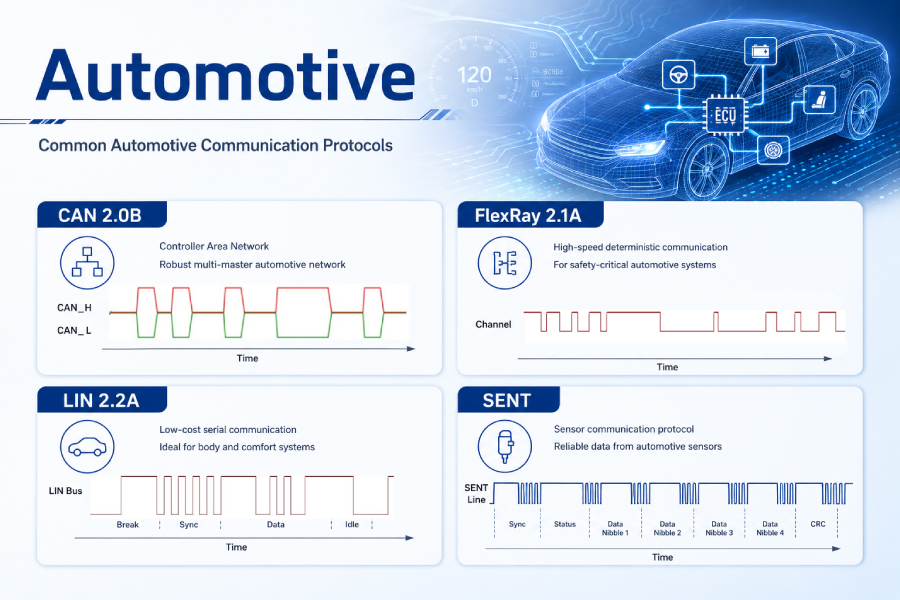
Automotive
Looking for reliable automotive communication protocols? We offer a decoder supporting CAN 2.0B, FlexRay 2.1A, LIN 2.2A, and SENT standards. Designed for mission-critical ECU networks.
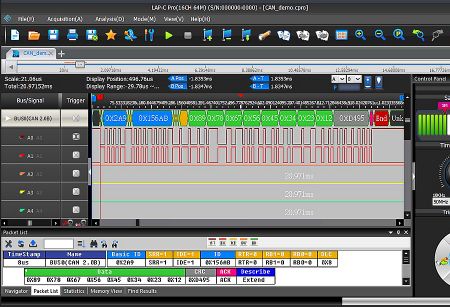
CAN 2.0B (Controller Area Network) Automotive Protocol Analysis
CAN Protocol Analyzer signal consists of two signal wires and a grounding wire, because of excellent...
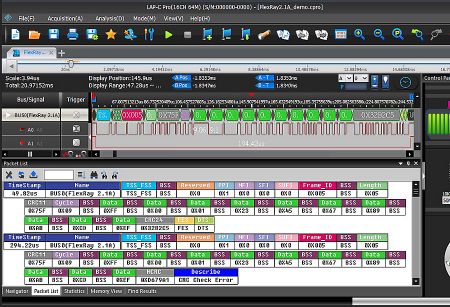
FlexRay 2.1A Automotive Protocol Analysis Application
FlexRay is one of the high-speed communication protocols commonly used in automotive electronics...
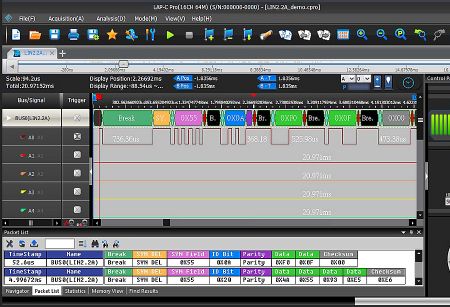
LIN 2.2A (Local Interconnect Network) Automotive Protocol Analysis
LIN (Local Interconnect Network) Bus is one kind of Bus interface, the special electron through...
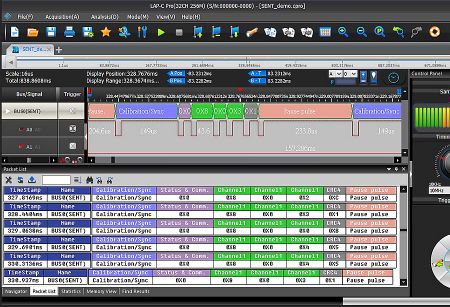
SENT Automotive Sensor Communication Analysis
The SENT (Single Edge Nibble Transmission, SAE J2716) protocol is a point-to-point, unidirectional...
 Download
Popular Products
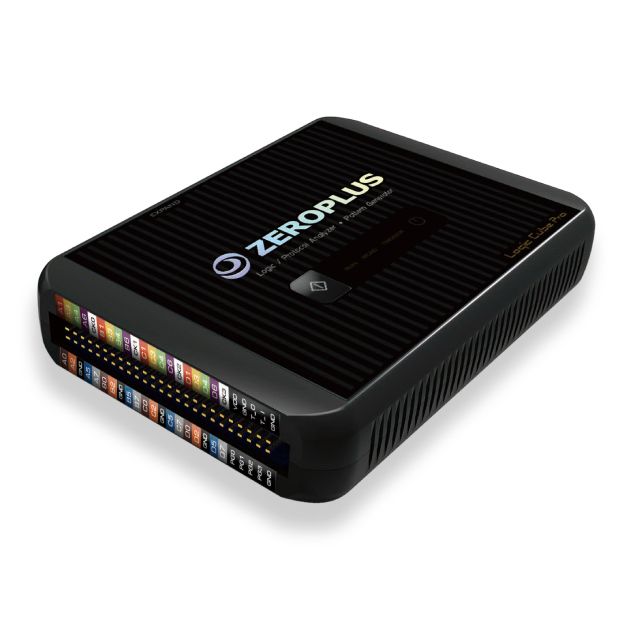
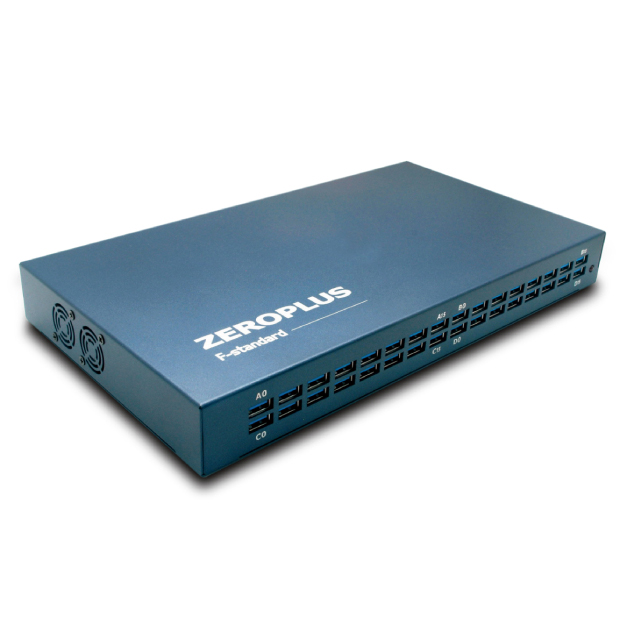
Decoding In-Vehicle Networks on One Analyzer
Vehicle electronics combine several networks with different jobs. CAN 2.0B frames carry control messages between ECUs, LIN serves low-speed body functions, FlexRay supports time-triggered communication, and SENT sends sensor values to an ECU over a single signal line. Zeroplus provides decoders for all four.
Each page lists the signal lines, rates and analyzer model support for its decoder configuration. CAN 2.0B is also one of the six hardware trigger protocols on LAP-F1, which helps when a fault appears only on a particular frame. The LIN decoder covers 2.4 to 20 kbps and the CAN decoder 10 kbps to 1 Mbps, far below the sample rate of any current analyzer, so selection is mostly about channel count: count the network and sensor lines that must be captured together, and decide whether long ECU test runs need USB 3.0 long-time recording.