
Protocol Simulator Board 2: USB 2.0, eMMC and SD 3.0
Protocol Simulator Board 2 outputs reference bus signals from a protocol list that includes USB 2.0, eMMC, SD 3.0, Quad SPI and SWD.
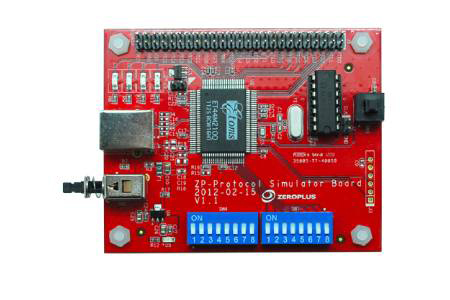
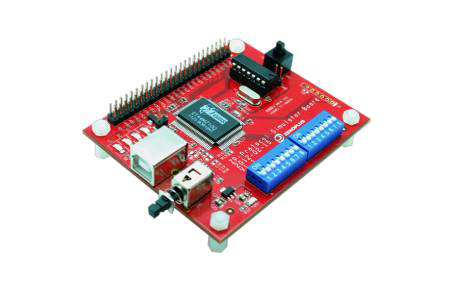
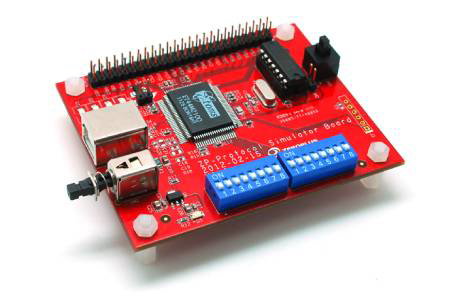
Signal Simulation & Demo Boards 2
FM00000414
The Protocol Simulator Board 2 is a versatile bus signal generation tool designed for engineering development and debugging. It simulates a wide array of standard communication protocols (including WIEGAND, MVB, SVID, HART, and USB2.0), enabling users to verify logic analyzer decoding, trigger settings, and system timing without the need for a live Device Under Test (DUT).
Universal Bus Signal Simulator with 100+ Protocol Support
The Protocol Simulator Board 2 is an essential instrument for embedded system development and protocol validation. Supporting 55 bus protocols with ongoing updates, this device excels at simulating high-quality bus signal outputs (including CMD, CLK, and DATA). Designed for seamless integration with Zeroplus Logic Analyzers, it allows for immediate signal decoding and analysis. For instance, when simulating an I2C signal, the board generates complete packet formats—such as Start, Address, R/W, Data, A-ACK/D-ACK, and Stop—streamlining the verification of complex communication protocols.
Features
- Extensive Protocol Support: Simulates 55 protocols, including WIEGAND, MVB, SVID, HART, and USB 2.0, with a growing library.
- Accurate Packet Output: Mimics real-world bus behavior by outputting complete packets with start/stop conditions, data bits, and ACK/NACK.
- Instant Decoding Validation: Optimized for use with logic analyzers to quickly verify protocol decoder software and trigger configurations.
- Hardware Control: Integrated DIP switches allow for rapid switching between different communication standards.
- Compact Form Factor: The small footprint (7 x 9.7 cm) ensures easy integration into any test bench environment.
Key Specifications
- Protocol Support: 55 types (including WIEGAND, MVB, SVID, HART, USB2.0, etc.)
- Signal Output: CMD, CLK, DATA bus signals
- Operating Modes: Supports Single Run and Continuous transmission modes
- Status Indicator: D1 signal activity LED
Applications
- Protocol Validation: Verifies the accuracy of protocol analyzer decoding software.
- R&D Debugging: Simulates peripheral signals during early-stage development to accelerate firmware coding.
- Educational Training: Provides standard communication waveforms for teaching electronic engineering and embedded systems.
- Production Testing: Acts as a reference signal source to test the receiving capabilities of production line equipment.
Specifications
| Item | Protocol Simulator Board 1 |
| Bandwidth | - |
| Real-time Sample Rate | - |
| Voltage Range | - |
| Trigger Source | - |
| Trigger Mode | - |
| Auto Measurements | - |
| Interface | - |
| Power Source | Bus-powered via Logic Analyzer (No external power required) |
| Dimensions | 70 x 97 x 25 mm |
| Weight | - |
| Supported Protocols | I2C (EEPROM 24L), PCI, MODOFIED MILLER, ISO7816 UART, SDQ, HD Aduio, UNI/O, MODIFIED SPI, WIEGAND, DALI Interface, SCCB, LPT, SAMSUNG K9 (NAND Flash), Compact Flash 4.1, OPENTHERM2.2, PHILIPS RC-5, MVB, PROFIBUS, WTB, PHILIPS RC-6, HDMI_CEC, HPI, DSI BUS, MICROWIRE (EEPROM 93C), DM114 DM115, DS1302, SPI (EEPROM AT25F), SVID, PT22262/PT2272, I2C (EEPROM 24LCS61/24LCS62), SHT11, LG4572, WWV/WWVH/WWVB, MIL-STD-1553, FWH, S2CWIRE/AS2CWIRE, DS18B20, GPIB, CMOS IMAGE, BDM, YK-5, HART, SWP, BMS, USB 2.0, KEELOQ Code Hopping, Differential Manchester, eMMC, 1-Wire, KNX, MIDI, SWD, SD3.0, Line Code, Quad SPI |
- Video
 Download
Popular Products

Reference Signals for Storage and USB Decoders
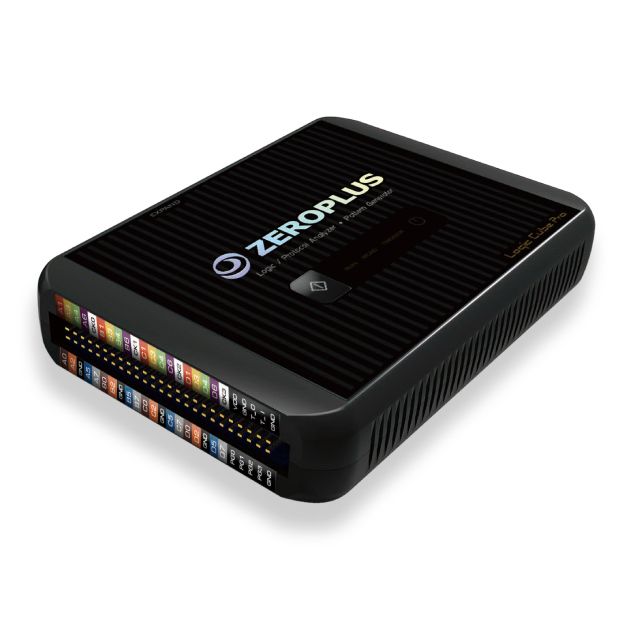
Protocol Simulator Board 2 uses the same simulate-and-decode approach as Board 1, outputting bus signals for a LAP-C Pro analyzer to decode, with a different protocol list for decoder testing that includes USB 2.0, eMMC, SD 3.0, Quad SPI and SWD. Storage and USB captures involve several lines and decoder options, so known traffic helps confirm the setup before a live target is connected.
Decoder support still depends on the analyzer: USB 2.0 decoding needs a 32-channel model with the USB 2.0 capture board, and eMMC decoding is supported on LAP-F series models and Bus Expert. Confirm that your analyzer supports each decoder you plan to practise. Board 2 shares the 7 x 9.7 x 2.5 cm format; for I2C, SPI, UART and CAN, see Protocol Simulator Board 1.