
ProCision Analyzer: Response-Time and Packet-Loss Statistics
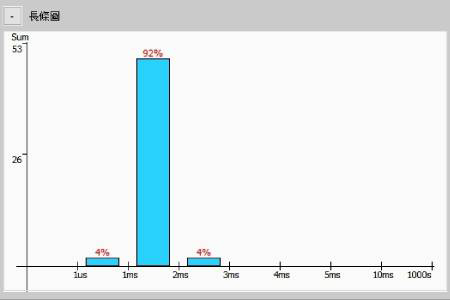
ProCision reports statistics on input/output response times and packet loss, with a response time distribution chart; USB bus-powered, USB 3.0.
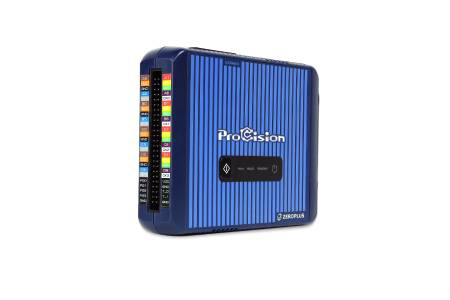
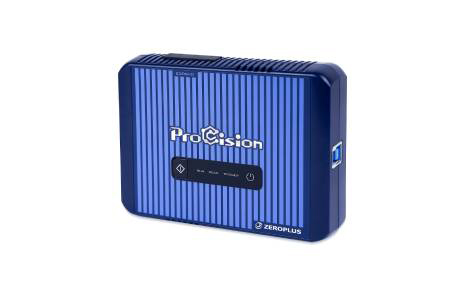
ProCision System Stability Analyzer
FM00011874
The ProCision is a high-density system stability analyzer engineered to replace limited 4-channel oscilloscopes in complex hardware validation. It enables One-Cycle Capture of power-on sequences, transforming messy waveforms into automated, high-fidelity summary reports.
For engineers long constrained by conventional 4-channel oscilloscopes, the ProCision 32-Channel System Stability Analyzer represents a paradigm shift in validation workflows. By entirely eliminating the cumbersome necessity for iterative equipment reboots and manual probe repositioning, this solution facilitates the simultaneous monitoring of dozens of critical signals—such as intricate Intel Power Sequences—within a single boot cycle. This high-density analytical approach not only mitigates human operational error but also ensures rigorous data consistency and unparalleled Signal Integrity across every acquisition cycle.
Features
- 32-Channel Signal Acquisition: Facilitates the simultaneous monitoring of 32 critical signals within a single boot cycle (e.g., Intel Power Sequence), completely eliminating the need for repeated measurements.
- Automated Pair: Automatically computes signal timing latency with microsecond-level (us) precision (e.g., from 5VSB to AUX_PCTL).
- Pass / Fail Verification: Executes Pass / Fail deterministic validation by benchmarking acquired data against target specifications, immediately flagging anomalies to enhance verification efficiency and mitigate timing errors overlooked by manual interpretation.
- Reusable Test Scripts: Deploys modular, predefined test scripts across identical CPU generations, significantly optimizing R&D man-hours through regression testing capabilities.
- High-Fidelity Standardization: Establishes a unified data format to ensure seamless collaboration and data sharing between R&D and QA teams while maintaining absolute Signal Integrity.
Applications
- Intel Power Sequence Validation: Capture dozens of timing signals in a single boot cycle to verify power-up integrity.
- Server & Motherboard R&D: Streamline complex hardware validation workflows for multi-signal system stability.
- Gaming Peripheral Optimization: Measure ultra-low button-to-signal latency with microsecond precision for competitive gaming gear.
- Automated QA Testing: Implement cross-departmental pass/fail standards to prevent hardware damage during power cycles.
- System Integrity Analysis: Verify signal intervals and timing deviations in high-stakes engineering environments.
- Workflow Standardization: Facilitates the seamless dissemination of high-fidelity, standardized test data between R&D and QA departments.
Specifications
| Operating System | Windows 11 / 10 / 8.1 / 7 |
| PC Interface | USB 3.0 (Plug & Play) |
| Power Consumption | 3W Max. (USB Bus-Powered) |
| Language Support | English / Traditional Chinese / Simplified Chinese |
| Channels | 32 Channels |
| Max. Sampling Rate | 2GHz / 8CH |
| Total Memory | 8 Gbits |
| Input Impedance | 200 kΩ / 7pF |
| Input Voltage Range | -30V to +30V (DC) |
| Threshold Range | -6V to +6V (Reference Voltage) |
| Dimensions (L x W x H) | 125 x 92 x 25 mm |
| Weight | 170 g |
| Operating Temperature | 5°C to 40°C (41°F to 104°F) |
| Certifications | FCC / CE / RoHS / REACH / WEEE |
| Warranty | 2-Year Limited Warranty |
- Gallery
-
-
 Software Interface
-
 Data Results
-
 Dual Data Results
-
- Video


 Download
Popular Products
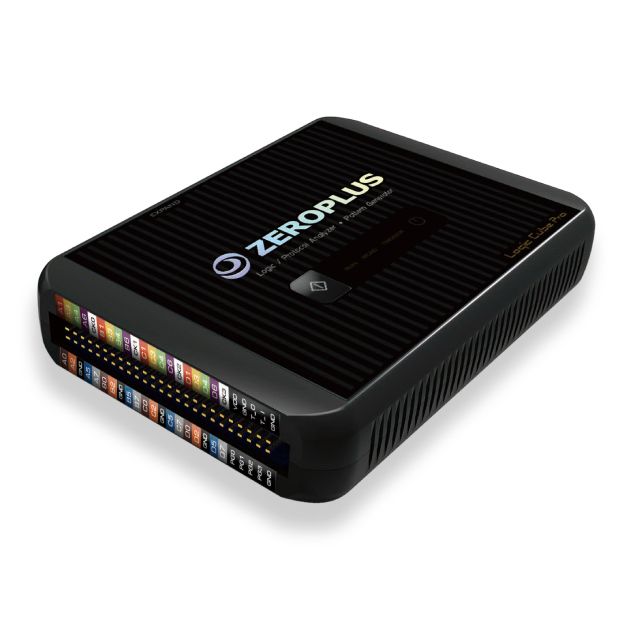

Measuring Response-Time Variation Over Many Events
The ProCision system stability analyzer collects signal data from a system under test and reports statistics on the response times of its inputs and outputs and on packet loss. A response time distribution chart shows the spread of response times, so occasional slow responses become visible instead of being missed in a single capture where everything looked normal.
ProCision is a separate instrument from the logic analyzers rather than an analyzer option, so it is ordered as its own unit. It runs from USB bus power over USB 3.0, and CE, FCC, RoHS, WEEE and REACH documentation is listed for the ProCision line. Before ordering, define which inputs, outputs and packets need monitoring and which response times matter to the system.